From Turtle Conservation to Tech Innovation: Tom Ingram’s Legacy in Transforming Scuba Diving’s Future
Guest Post by Joe Gonzalez
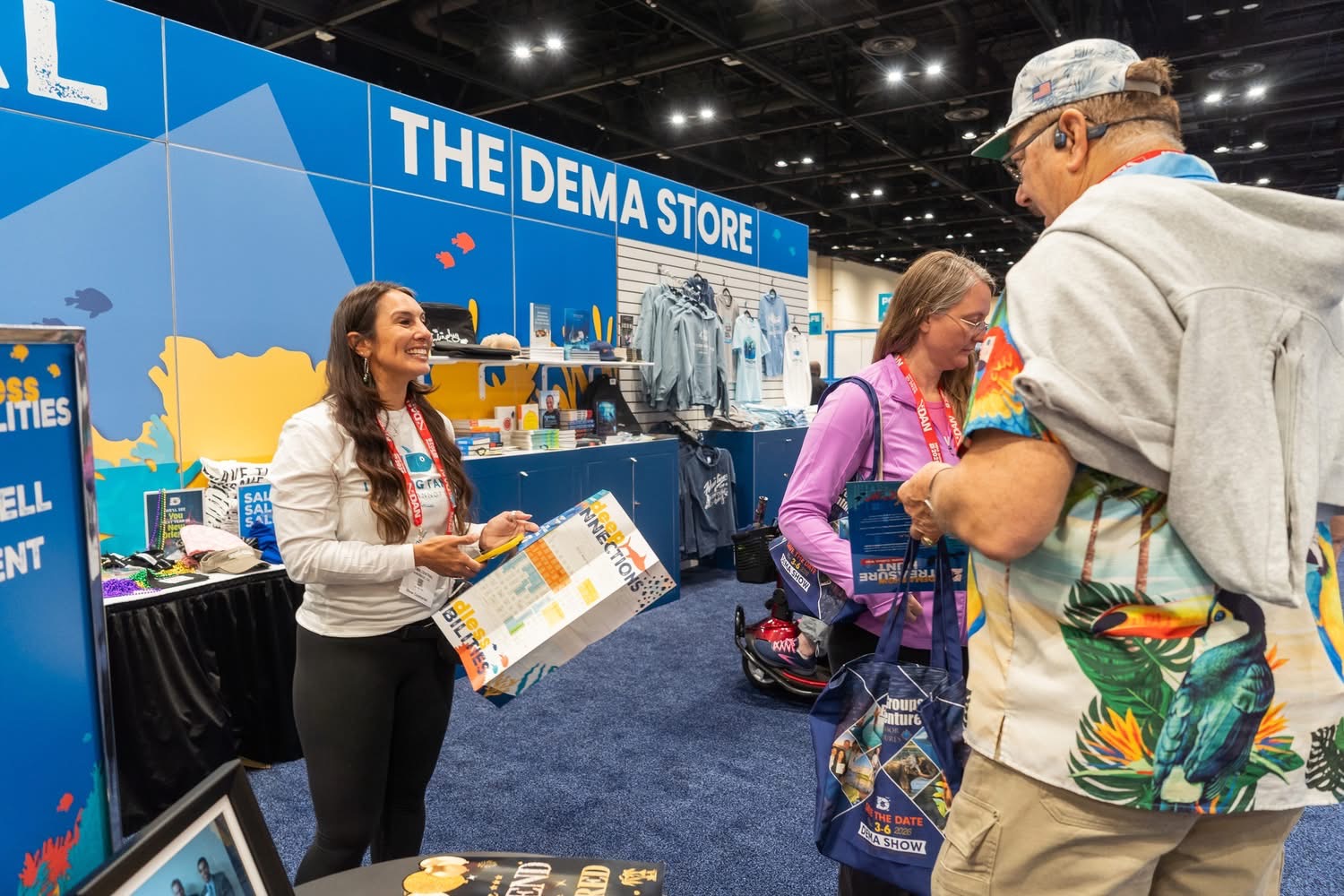
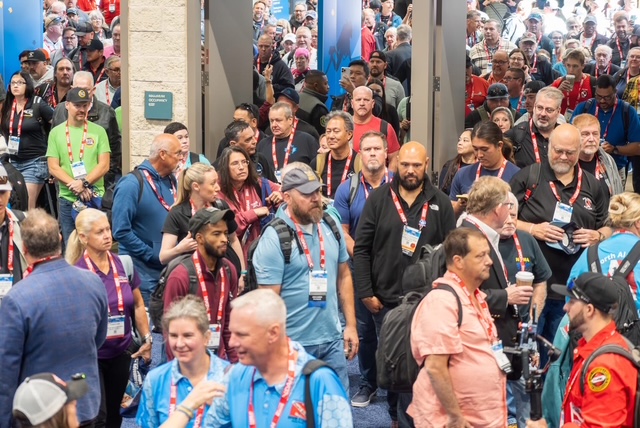
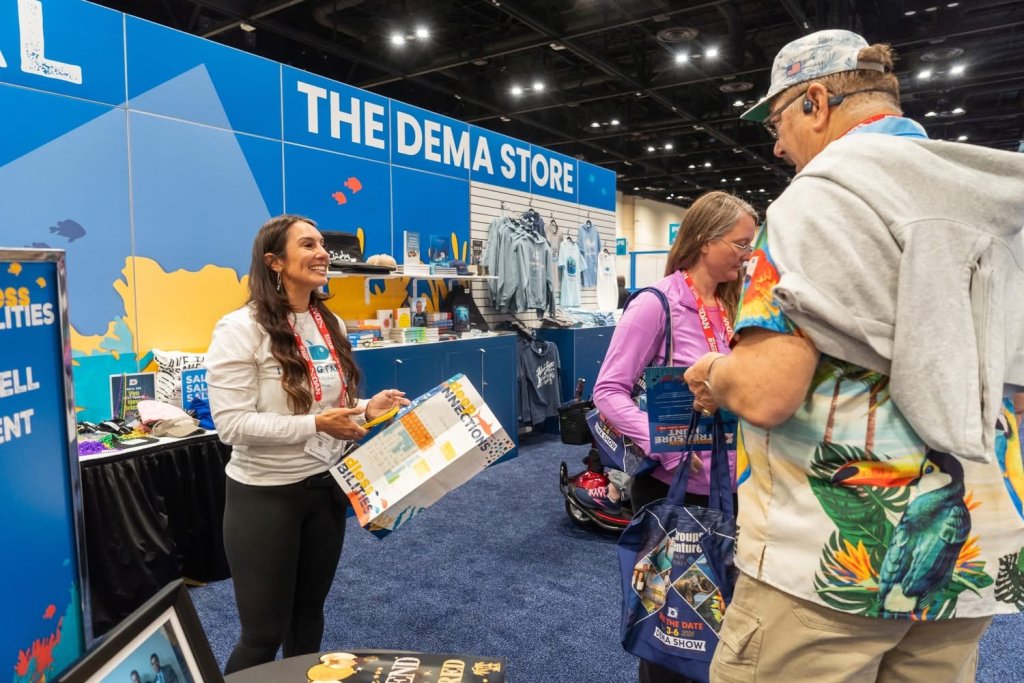
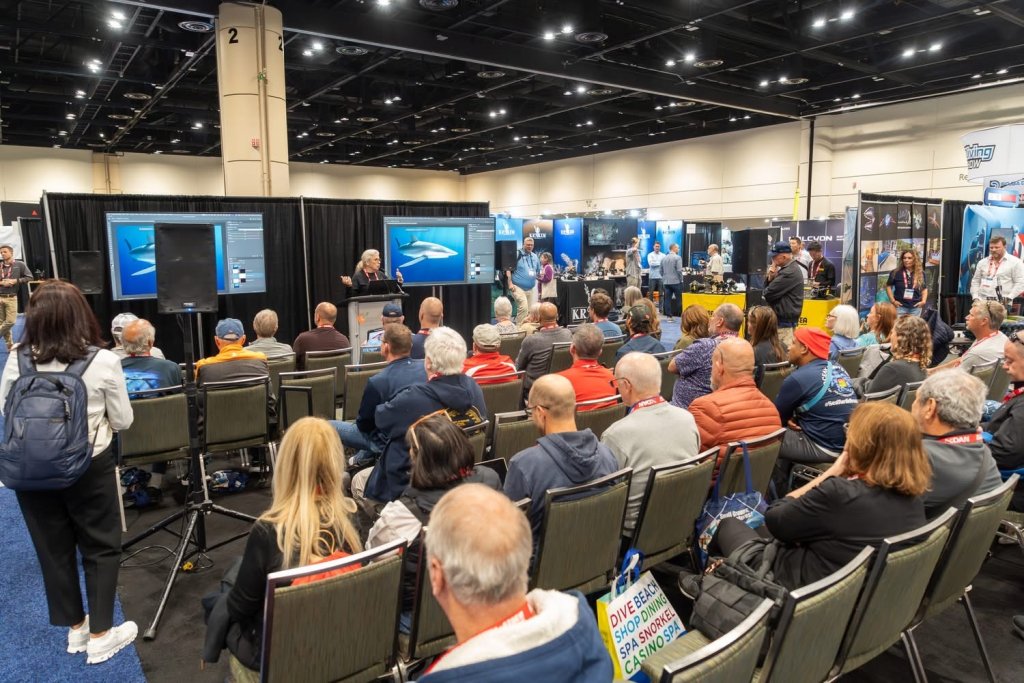
While attending DEMA 2025 in Las Orlando, FL today, I had the opportunity to sit down with recently announced retiree Tom Ingram, CEO of DEMA (Diving Equipment & Marketing Association), the diving industry’s premier trade association. As the show floor buzzed with the latest innovations and industry leaders networked around us, Ingram reflected on 23 years of steering the organization through unprecedented technological and business transformation.
When Tom Ingram first joined DEMA in 2002, the diving industry looked remarkably different than it does today. Dive computers were bulky, unreliable contraptions. Marketing meant placing ads in dive magazines and hoping for the best. The concept of using sophisticated data analytics to understand dive consumers would have seemed like science fiction.
Twenty-three years later, as Ingram prepares to step away from his role leading the diving industry’s premier trade association, he leaves behind a transformed landscape—one where technology, data-driven insights, and strategic thinking have become as essential to dive operations as tanks and regulators.
The Quiet Revolutionary
Ingram’s career trajectory reads like a masterclass in institutional evolution. As an active course director and instructor himself, he never lost touch with the water even while steering DEMA through decades of industry transformation. This dual perspective—understanding both the business mechanics and the visceral experience of diving—proved invaluable in guiding the organization’s strategic direction.
“Every time I come to DEMA’s show, it just re-energizes me,” Ingram reflects. “It makes me realize how much of a community we are.” This sense of community, paired with rigorous business discipline, became the foundation of his leadership philosophy.

Bringing Big Data to Small Businesses
Perhaps Ingram’s most significant contribution has been democratizing sophisticated marketing tools for an industry dominated by small, independent operators. Working with Claritas, a company that’s been pioneering geodemographic profiling since the 1980s, DEMA now offers member dive shops access to the same caliber of consumer intelligence that drives location decisions for Target and Walmart.
The software creates detailed profiles of households within a 30-minute drive radius of any dive shop—the typical maximum distance customers will travel. It reveals not just demographics, but psychographics: what people buy, what restaurants they frequent, even what kind of tennis shoes they prefer. For dive shops that renewed their DEMA membership by August 15th, Ingram’s team provided these reports—valued at over $1,500—completely free.
Think of it like having X-ray vision into your neighborhood’s consumer DNA. A dive shop owner can now understand exactly who lives nearby, identify which households match the profile of active divers, and target their social media advertising with surgical precision. It’s the difference between shouting into the void and having a conversation with your ideal customer.
“Most dive customers will not drive more than 30 to 45 minutes away to get to a store,” Ingram explains. “If you understand what that profile is, this software will tell you where the rest of those people are that are surrounding your store and allow you to market directly to those households.”
The implications extend beyond marketing. For retiring shop owners looking to sell, these profiles provide concrete evidence of market potential. For entrepreneurs considering new locations, they offer data-driven site selection rather than gut instinct.
Navigating Regulatory Waters
While bringing cutting-edge tools to the industry, Ingram also spent considerable energy protecting it from well-intentioned but misguided regulation. His most pressing concern? Government intervention by legislators who’ve never donned a wetsuit.
The aftermath of the tragic 2019 Conception fire illustrated the problem perfectly. In response to what was fundamentally a boating accident, California legislators changed liability lookback periods specifically for dive boats—from six months to two years. The result? One Hawaii operator saw insurance costs spike by $160,000. “Nobody can survive that,” Ingram notes simply.
In Minnesota, a commercial diving accident involving untrained workers prompted legislation that conflated commercial and recreational diving standards. Ingram intervened, providing education about industry standards and successfully advocating for practical safety requirements like oxygen on-site and CPR training—rather than misguided mandates that would have actually increased risks.
“Never in the history of mankind has government intervention not caused costs to go up,” he observes. It’s a principle that guided his advocacy work: the industry must police itself or face external regulation from those who don’t understand it.
The Technology Revolution
From his vantage point spanning more than two decades, Ingram witnessed the complete technological transformation of diving. He still owns an Orca Skinny Dipper—one of the first-generation dive computers, now a museum piece. Today’s devices from Garmin, Aqualung, and others bear no resemblance to those early attempts.
“Some of the stuff I see is just incredible,” he marvels, discussing emerging technologies like underwater GPS tracking that can monitor students or recreational divers in real-time. While currently expensive, he predicts these innovations will become affordable and commonplace.
The evolution extends beyond hardware. DEMA board member Mike Hollis, who works for ProAsia—a supplier for much of the industry’s computer technology—keeps the organization connected to cutting-edge developments. This ensures DEMA stays ahead of technological curves rather than reacting to them.
Marketing Messages and Environmental Realities
One of Ingram’s more nuanced insights concerns environmental messaging—a potentially controversial topic he approaches with characteristic directness. While passionate about ocean conservation, he warns against marketing missteps.
“If we all keep harping on the idea that the ocean is dead or dying, why would I want to go diving?” he asks. “So we need to be careful about how we do that.”
It’s not about ignoring environmental challenges, but about framing them constructively. Activities like reef monitoring, coral restoration, and debris removal offer ways to engage with conservation without messaging that inadvertently discourages participation. The balance requires finesse: acknowledging problems while emphasizing opportunities to make a difference.
Untapped Markets and Future Growth
When discussing industry growth, Ingram identifies opportunities others might overlook. While everyone focuses on attracting younger divers, he points to the 70 million baby boomers who remain active and have both money and time for dive travel.
The average age for dive travel is late 40s—not because older people can’t dive, but because they’re the ones who can afford it.
He also sees significant potential in adaptive diving for people with disabilities, particularly among veterans and the deaf community. “Communication underwater is so much easier,” he notes about diving for the deaf—a simple observation that opens up an entire demographic.
Perhaps most importantly, Ingram emphasizes the “returning diver” market. Countless people learned to dive in their twenties, stopped during their child-raising years, and now want to return.
“I started diving when I was in college, and then I got married and had kids, so I didn’t dive for the last 25 years,” he recounts as the typical story. “But now I want to come back in.”
These returning divers represent low-hanging fruit—people who don’t need convincing about diving’s appeal, just an accessible pathway back into the water.
The Numbers Game
Ingram maintains realistic expectations about diving’s market penetration. “It’s never going to be more than 2% of the population,” he states matter-of-factly. Rather than chasing unrealistic growth projections, he focuses on maximizing engagement within that achievable demographic.
This realism extends to his assessment of introductory programs. Resort courses and discovery dives serve a purpose, but “where we don’t do well as an industry is we don’t follow up.” A resort that puts 600 people through introductory courses in six months but fails to follow up wastes that opportunity. The challenge isn’t creating interest—it’s converting interest into sustained participation.
A Personal Connection to the Water
Throughout his tenure at DEMA, Ingram maintained his connection to diving itself. He’s looking forward to retirement partly because “I’m going to get myself back into the water a little bit more regularly.” His current work keeps him so busy that servicing his gear and planning dive trips have taken a back seat.
Based in Idaho now—a move made during the pandemic—Ingram and his wife pursue wildlife photography, particularly of moose. It’s a fitting parallel to his diving career: studying behavior, waiting for the right moment, capturing something remarkable. The same patience and observation that make for good photography serve well in association leadership.
With kids in Phoenix and San Diego, and a wife who still works, his retirement plans balance family time with renewed diving freedom. “The good thing is I can go on a Wednesday instead of waiting for Saturday,” he notes—the simple pleasure of scheduling flexibility after decades of structured responsibility.
The Institutional Foundation
As Ingram departs, he emphasizes that DEMA itself will continue uninterrupted. “We’ve got procedures and policies and all those things in place,” he explains. “All that’s going to keep on going no matter who’s at the head of this thing.” The staff remains intact, preserving institutional memory and operational continuity.
It’s perhaps the ultimate measure of effective leadership: building systems that transcend any individual. Ingram didn’t just guide DEMA through two transformative decades—he established frameworks that will continue generating value long after his departure.
The View from the Surface
From his involvement with the Historical Diving Society to his public policy work with association executives, Ingram remains engaged with the broader recreational industry landscape. His perspective spans not just diving’s evolution, but how it compares to skiing, surfing, fishing, and other outdoor pursuits.
Remarkably, diving has adopted sophisticated consumer intelligence tools that these other industries haven’t embraced. “I always say, well, you know, I’ve got actionable data,” Ingram recounts from association discussions. “How do you do that?” The answer—strategic adoption of business intelligence tools—has given diving a competitive advantage in understanding and reaching its audience.
As Tom Ingram transitions from daily DEMA leadership to the next chapter—wherever that leads—he leaves an industry far better equipped for its future than when he arrived. More professional. More data-driven. Better defended against misguided regulation. And still connected to the fundamental experience that drew him to diving in the first place: the community, the ocean, and the simple joy of being underwater.
His legacy isn’t measured in tanks filled or certifications issued, but in the institutional capacity he built for an entire industry to understand itself, serve its customers, and navigate an increasingly complex world. That’s leadership that makes waves long after you’ve left the water.

 Plan your next dive adventure with PADI Travel
Purchase your next dive trip from PADI Travel at our affiliate link below and receive a free $500 Hotel Discount Card that can be used worldwide for hotel stays , car rentals and excursions.--> http://forscubadivers.com/DivePadi
Click Here To See How Hotel Savings Cards Work (video)
Simply email proof of purchase for verification. Terms apply, see terms on your Hotel Savings Card email.
